Largemouth Bass Spawn Timing in South Carolina Reservoirs
One of the most thrilling times to target largemouth bass in South Carolina is during their annual spawning season. It's that magical window when these aggressive game fish are focused on reproduction, often making them more predictable and, let's be honest, easier to locate. If you've ever felt frustrated trying to find those elusive lunkers, understanding the spawn timing in our diverse South Carolina reservoirs is truly a game-changer for your fishing success.
The Largemouth Bass Life Cycle in South Carolina Reservoirs
To truly understand the spawn, you first need to appreciate the full yearly cycle of a largemouth bass. It’s not just one event, but a series of interconnected phases, each with its own unique behaviors and fishing opportunities. From the cold, dormant winter months to the heat of summer, these fish are constantly adapting, but none more dramatically than during the spring transition.
Pre-Spawn: The Feeding Frenzy Before the Big Event
Ah, the pre-spawn! This is often considered by many seasoned anglers to be the absolute best time to catch a trophy largemouth in South Carolina. As winter's chill begins to recede and water temperatures slowly climb, bass start to shake off their lethargy. They move from their deeper winter haunts into shallower, warmer staging areas, often congregating in protected coves, creek arms, and around submerged timber. Their primary instinct during this phase is to feed relentlessly, building up the energy reserves they'll need for the arduous spawning process. Think of it like athletes carb-loading before a big race – they need all the fuel they can get. They're actively chasing baitfish, crawfish, and anything else that looks like a hearty meal. This aggressive feeding behavior makes them highly susceptible to a variety of lures, and it's not uncommon to land some of the heaviest bass of the year during this window.
Anglers often find that areas with a mix of shallow flats and deeper water access are prime locations during the pre-spawn. Bass will stage on the edges of these deeper pockets, moving up into the shallows to feed during warmer periods, especially on sunny days. If you’re fishing a reservoir like Lake Murray, you might find them staging near main lake points or in the backs of major creeks before they push even further into the coves to seek out bedding areas. Understanding these staging patterns is crucial for consistent success during this active period.
The Spawn: When Bass Are on the Beds
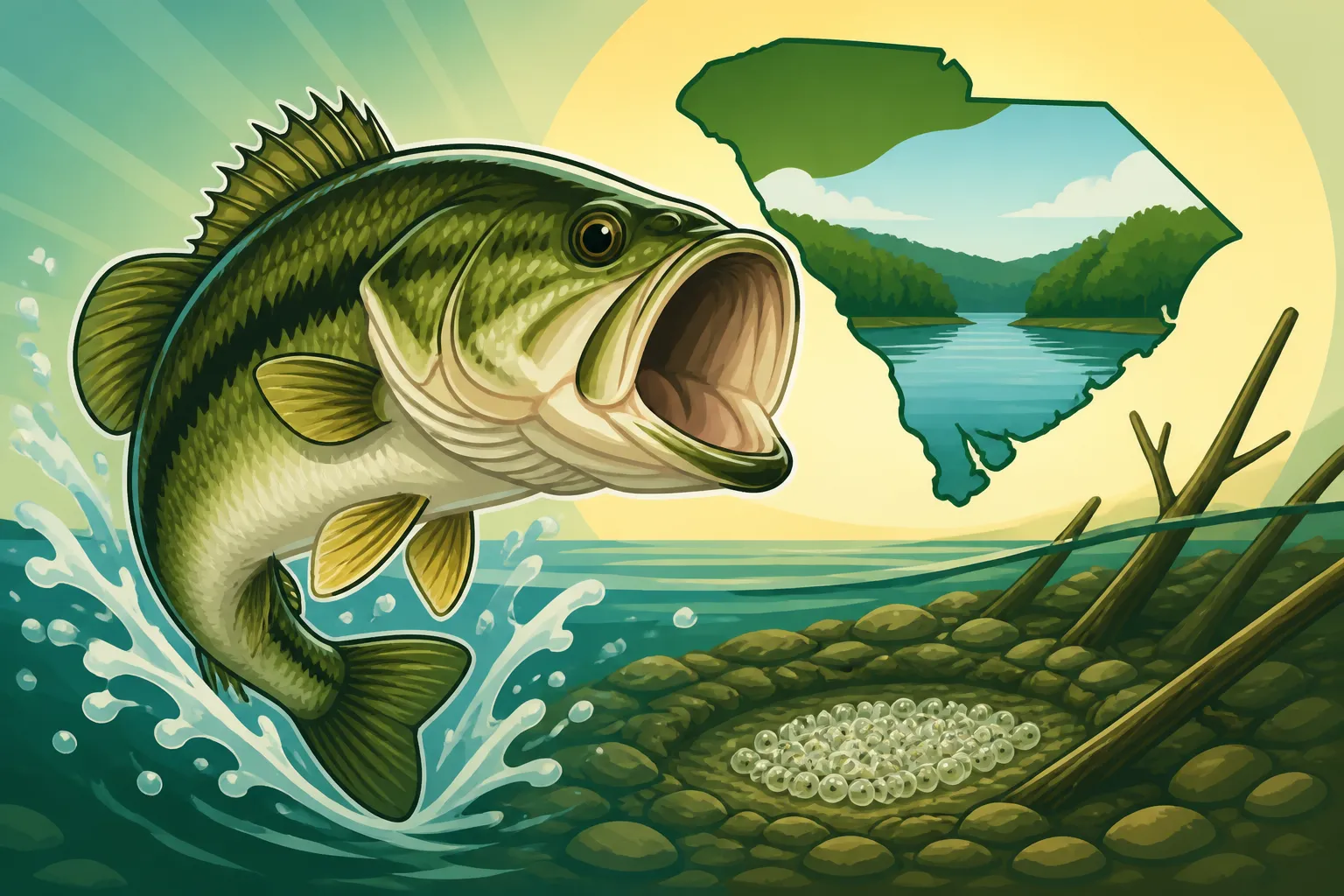
This is the main event everyone talks about! The actual spawn sees male bass moving into very shallow water, typically ranging from 1 to 8 feet deep, depending on water clarity and cover. Their mission? To clear out circular depressions on the bottom, known as beds or nests, usually near some form of cover like a stump, dock pilings, or a clump of submerged grass. These beds are meticulously prepared to protect the eggs. Once the beds are ready, the females move in, lay their eggs, and the males fertilize them. The female typically departs shortly after, leaving the male to guard the nest fiercely against predators.
During the spawn itself, bass are incredibly territorial and protective. They aren't necessarily "feeding" in the traditional sense, but they will strike anything that they perceive as a threat to their eggs or fry. This is where sight fishing comes into play, especially on clear water reservoirs like Lake Keowee. You can literally spot bass on their beds, and the challenge becomes coaxing them into biting. The key is to repeatedly present a lure in or very near the bed until the bass, driven by instinct, decides to move the intruder. It requires patience and precision, but the reward of hooking a bedded bass is incredibly satisfying.
Post-Spawn: Recovering and Scattered Action
Once the spawning ritual is complete, bass enter the post-spawn phase. This can be a tricky time for anglers because the fish are often exhausted and scattered. The females, in particular, are depleted of energy and often retreat to deeper, cooler water to recover. They might be sluggish for a week or two, focusing on rest rather than active feeding. The males, having guarded the nests, are also weary but will remain somewhat active protecting any hatched fry for a short period before joining the females in their recovery.
This period can feel frustrating because the predictable patterns of the pre-spawn and spawn disappear. Bass are less concentrated, and their feeding activity is inconsistent. However, as they regain their strength, they will start to move towards summer feeding patterns, often cruising channel edges, submerged humps, or moving into areas where baitfish are abundant. Targeting areas with good cover and access to deeper water becomes important. Patience and covering a lot of water with various lures are often the keys to success during this recovery period.
Understanding Water Temperature as the Key Trigger
If there's one single factor that dictates when largemouth bass spawn in South Carolina, it's water temperature. Mother Nature's thermostat is the ultimate authority, and understanding its role is paramount for predicting the spawn. Forget the calendar; watch the thermometer!
Ideal Temperature Ranges for Spawning Activity
Largemouth bass are incredibly sensitive to water temperature when it comes to their reproductive cycle. The magic window for them to really get down to business, meaning building beds and laying eggs, typically falls between 62 and 68 degrees Fahrenheit. However, it's not quite that simple. The sustained temperature is what truly matters. You might see some early birds making beds when the water hits the upper 50s, but the main wave of spawning activity, often called the "peak spawn," kicks in reliably once that 62-degree mark is consistently maintained.
Think about it like this: a single warm day might bump the surface temperature up, but if it's followed by a series of cold nights, the bass will hold off. They need that stable warmth to commit to such an energy-intensive process. Many veteran anglers will tell you that once the water thermometer on their depth finder reads a steady 62-65 degrees for a few days in a row, it's time to start looking for those beds. This is true for many of our major fisheries, from Lake Marion to Lake Hartwell.
| Spawn Phase | Water Temperature Range (Fahrenheit) | Bass Behavior |
|---|---|---|
| Pre-Spawn | 50-62°F | Aggressive feeding, staging in shallower water |
| Peak Spawn | 62-68°F | Building beds, laying eggs, guarding nests |
| Post-Spawn | 68°F+ (recovering) | Scattered, recovering, light feeding |
The Role of Early Spring Warming Trends
South Carolina is known for its sometimes-fickle spring weather. We can have glorious 70-degree days followed by sudden cold snaps. These early spring warming trends are what really get the pre-spawn bass active and nudge them towards the eventual spawn. When the sun shines brightly for several consecutive days, especially after a period of cooler weather, the shallow waters in the backs of coves and creek arms heat up significantly faster than the main lake. This warmer water is like a siren song for bass.
They'll follow these warming trends, moving from deeper wintering holes into these shallower areas, often for feeding. This initial push into the shallows is a fantastic time to target them, even if the main spawn isn't quite underway. It's during these periods that you'll often hear reports of anglers catching some really big pre-spawn bass. However, a sudden cold front can put a screeching halt to this progress, pushing bass back to deeper water temporarily until stable warmth returns. This yo-yo effect can make predicting the exact start of the peak spawn a bit of a challenge, but observing these warming trends gives you a huge head start. For more specific insights, you might check out guides like our "South Carolina Bass Fishing Techniques by Season" post.
Regional Variations and Reservoir Specifics Across South Carolina
South Carolina isn't a monolith when it comes to climate, and neither are its largemouth bass spawning patterns. Our state stretches from the Appalachian foothills to the coastal plain, and this geographical diversity means the spawn unfolds at different times and with different nuances depending on where you're fishing. It's never a one-size-fits-all situation.
Upstate Lakes: A Later Start to the Spawn
If you're heading to the beautiful Upstate reservoirs like Lake Hartwell, Lake Keowee, or Lake Jocassee, be prepared for a slightly later spawn compared to their counterparts further south. The Upstate experiences colder winter temperatures and often a more prolonged spring thaw. This means the water temperatures take longer to reach that crucial 62-68°F range that largemouth bass prefer for spawning. Generally, you can expect the peak spawn in these lakes to begin in late March and extend well into April, sometimes even early May in the highest, coldest waters of Jocassee.
The mountainous terrain also influences things; deeper, clearer lakes like Keowee and Jocassee may warm slower than some of the more turbid, shallower arms of Hartwell. Anglers targeting Lake Hartwell, for example, might find bass bedding in the warmer, shallower Tugaloo River arm a bit earlier than in the main body of the lake. The key here is patience and keeping a close eye on those localized water temperature readings. It's also worth noting that many of these Upstate lakes have excellent populations of Spotted Bass, which often spawn a little earlier than their Largemouth cousins. If you are targeting bass in the spring, it's important to understand the nuances of "Lake Hartwell Spring and Fall Bass Fishing Patterns in South Carolina" for maximum success.
Midlands and Coastal Plain Reservoirs: Earlier Warm-Ups
As you move into the Midlands and especially the Coastal Plain, the bass spawn typically kicks off earlier in the year. Reservoirs like Lake Murray, Lake Santee Cooper (Marion and Moultrie), and Lake Wateree are known for their strong bass fisheries and their tendency to warm up sooner in the spring. In these waters, it's not uncommon to see the first signs of pre-spawn activity in late February, with the main spawn hitting its stride in March and often wrapping up by mid-April.
Take the Santee Cooper lakes, for instance – Lake Marion and Lake Moultrie. These vast, shallower, and often more turbid waters absorb and retain heat more readily than the clear, deep Upstate lakes. This means water temperatures can climb into the low 60s much faster. Anglers in the Santee Cooper region might already be catching bedded bass while Upstate anglers are still waiting for pre-spawn to fully develop. Similarly, Lake Murray, being a large, central South Carolina lake, typically sees its spawn begin in March. Knowing these regional differences can save you a lot of wasted time and help you plan your trips more effectively. For anyone planning a trip to the Santee Cooper lakes, consulting a guide on "Santee Cooper Bass Fishing Seasons in South Carolina" can be invaluable.
How Weather Patterns Influence the Spawn Timing
While water temperature is the ultimate arbiter, weather patterns are the conductors of that temperature, orchestrating its rise and fall. Understanding how these atmospheric forces interact with the water can give you a significant edge in predicting and capitalizing on the bass spawn in South Carolina. It’s rarely a steady climb; more often, it’s a rollercoaster, and the bass feel every bump.
The Impact of Cold Fronts and Temperature Swings
This is the bane of many spring anglers: the dreaded cold front. You've been having fantastic fishing, water temperatures are creeping into the low 60s, and then BAM! A strong cold front pushes through, bringing dropping air temperatures, high pressure, and often clear skies. What happens to the bass? They get lockjaw. Seriously, it can feel like someone just flipped a switch and turned off their bite. Cold fronts cause surface water temperatures to drop, and more importantly, they often trigger a major change in barometric pressure.
Bass, being sensitive creatures, react by becoming lethargic and often retreating to deeper, more stable water. If they were already on beds, they might abandon them temporarily, or at the very least, become incredibly difficult to provoke. The key is to recognize this pattern. Don't waste your time aggressively fishing shallow beds immediately after a cold front. Instead, look for bass to pull back to the nearest deep cover – channel swings, ledges, or brush piles – and consider slowing down your presentation. It might take a few days of stable, warmer weather for them to move back up and resume their spawning activities. Patience is definitely a virtue when dealing with post-cold front conditions.
Prolonged Warm Spells and Extended Spawning Windows
On the flip side, sustained periods of warm, stable weather can create an angler's paradise during the bass spawn. When we get several days, or even weeks, of consistently warm air temperatures and sunny skies, the water temperature stabilizes and often continues its upward trend. This is when the bass really commit to the spawn. A prolonged warm spell doesn't just kickstart the spawn; it can also extend the window of peak activity.
Instead of a short, intense burst, you might find bass spawning in waves over a longer period. Different areas of the lake may warm at slightly different rates, leading to a staggered spawn where some bass are on beds while others are still in pre-spawn or just starting to recover. This extended window is fantastic because it gives anglers more opportunities to target active fish. During these stable periods, bass are more likely to be found in predictable shallow areas, making sight fishing or targeting visible cover much more effective. Make sure to keep an eye on weather forecasts on your phone or on a dedicated weather app that provides water temperature predictions.
Identifying Spawning Beds and Locating Nesting Bass
Spotting largemouth bass on their beds is an incredibly exciting part of spring fishing. It takes a keen eye, the right conditions, and knowing where to look. There’s a thrill in the hunt, even before you cast a line, as you try to pick out those tell-tale signs.
Visual Cues for Finding Beds in Shallow Water
The first step to finding bedding bass is often simply seeing them. This requires clear water and favorable light conditions. Look for circular, cleared-out depressions on the bottom, usually lighter in color than the surrounding sediment. These are the beds! They can range from dinner-plate size to much larger, depending on the size of the bass. Often, you'll see a male bass either hovering directly over the bed, fanning it to keep silt off the eggs, or positioned very close by, usually facing outwards to guard against intruders.
Polarized sunglasses are absolutely non-negotiable for sight fishing. They cut the glare off the water's surface, allowing you to peer beneath and spot those subtle changes on the bottom. Early mornings or late afternoons, when the sun isn't directly overhead, can also provide better visibility due to less harsh glare. Slowly cruise shallow coves, protected points, and pockets, paying close attention to any light spots or dark shapes moving over them. You're looking for that tell-tale circle, or even just the faint outline of a bass. Fishing from a boat with a trolling motor allows for silent, precise maneuvering, giving you the best chance to spot these wary fish without spooking them. Many anglers find their best polarized sunglasses on Amazon, ensuring good clarity for spotting those elusive beds.
Best Locations for Bass to Build Their Nests
Bass don't just build beds anywhere; they choose specific locations that offer protection, stability, and ideal conditions for their offspring. Understanding these preferred spots can significantly narrow down your search. Look for areas with hard bottoms – gravel, sand, or small rocks are ideal. Muddy or silty bottoms are generally avoided, as they don't provide a stable base for the eggs.
Key structural elements act as magnets for bedding bass. Think about stumps, submerged logs, dock pilings, rock piles, or even thick clumps of aquatic vegetation. These features provide cover for the adult bass guarding the nest and offer protection for the newly hatched fry. Protected coves, shallow pockets, and the backs of creek arms are prime real estate, as they are often shielded from strong winds and boat traffic, and they tend to warm up faster. In South Carolina's Lake Murray, for example, you'd want to check the shallow coves along the shoreline, especially those with some submerged wood or riprap nearby. Similarly, on the Santee Cooper lakes, vast shallow flats with scattered cypress trees are prime targets. Essentially, bass look for a nursery that offers security and warmth, so focus your efforts on these types of areas.
Fishing Techniques Tailored to Each Spawn Phase
Fishing during the largemouth bass spawn isn't just about finding the fish; it's about employing the right tactics for their specific behavior at each stage. What works in pre-spawn will often fail during the peak spawn, and vice-versa. Adapting your approach is key to consistently catching fish during this dynamic time.
Pre-Spawn Tactics: Targeting Aggressive Feeders
During the pre-spawn, bass are on a mission to eat, and they're not shy about it. This means you can often get away with more aggressive presentations and faster-moving baits. Crankbaits are a classic choice, especially those that mimic crawfish or baitfish. They allow you to cover water quickly and provoke reaction strikes from hungry bass. Lipless crankbaits, like the iconic Rat-L-Trap, are also deadly when burned over shallow grass or bounced off submerged cover. For those targeting "Pre-Spawn Bass Techniques for South Carolina's Lake Murray", remember that covering water is often more important than pinpoint accuracy.
Another fantastic option is a jig and trailer, especially one in a crawfish pattern. Bass are often feasting on crawfish in the pre-spawn, and a slowly dragged or hopped jig can be irresistible. Spinnerbaits and chatterbaits are also excellent for covering water and can be highly effective around submerged wood and vegetation. The key here is to match the hatch and present something that looks like an easy, high-calorie meal. Don't be afraid to experiment with retrieve speeds and colors, but generally, anything that provokes an aggressive feeding response is likely to work. Stock up on these versatile lures from a reliable retailer like Amazon before your trip!
Spawning Bed Strategies: Careful and Deliberate Approaches
Once bass are on their beds, the game changes entirely. They are no longer primarily feeding; they are guarding. This requires a much more deliberate and often frustratingly patient approach. The goal isn't to make them eat, but to annoy them into striking. Soft plastics are king here. Lures like Texas-rigged or Carolina-rigged worms, lizards, or creature baits are perfect because they can be presented slowly and precisely. When you find a bedded bass, cast your lure beyond the bed and slowly drag it into the nest. Let it sit there for a moment, twitch it, and then let it sit again. The idea is to make the bass feel like the lure is an invading predator.
Sometimes, a bass will just pick up the lure and move it off the bed without actually "biting" in the traditional sense. It's crucial to watch your line for any subtle movement or twitch, and when in doubt, set the hook! The color of your lure can sometimes make a difference; natural colors or even bright white can provoke a response. Remember that repeatedly irritating the fish is often what triggers the strike. If you’re really struggling, sometimes switching to a different lure type or color can be the spark they need. Anglers looking to improve their "How to Fish the Bass Spawn on South Carolina's Lake Hartwell" should really focus on these subtle, repetitive presentations.
Post-Spawn Recovery: Covering Water and Finding Active Fish
The post-spawn can be challenging because bass are often scattered and recovering. They're not as aggressively feeding as pre-spawn, nor are they as predictably territorial as during the spawn. This phase requires a bit more detective work and a willingness to cover a lot of water. Females will often retreat to deeper water, seeking cooler temperatures and a chance to rest. Males may hang around shallower cover for a bit, guarding any remaining fry, but eventually they too will move off.
Look for bass to be holding on secondary points, main lake points, channel swings, or along the edges of grass lines where they can ambush baitfish. Topwater lures, such as poppers or walking baits, can be effective during low-light conditions as bass start to recover and feed on the surface. Swimbait presentations, especially those mimicking shad or bream, can also work well as bass look for easy meals. Don't be afraid to throw a wacky-rigged Senko or a shaky head around docks and brush piles, as these slower presentations can entice lethargic fish. As the water continues to warm, bass will transition fully into their summer patterns, often relating more to thermoclines and deeper structures. For those fishing the Santee Cooper system, understanding "Post-Spawn Bass Patterns on South Carolina's Santee Cooper" can significantly increase your catch rates during this transitional period.
Disclaimer
Please remember that fishing regulations, including bag limits and size restrictions, can change. Always consult the latest South Carolina Department of Natural Resources (SCDNR) regulations before heading out on the water. This guide is for informational purposes only and does not constitute legal advice.