Charleston Harbor Sheepshead Fishing Spots
Finding those elusive sheepshead in Charleston Harbor can feel like trying to crack a secret code, especially with their notoriously subtle bite and preference for specific, often hard-to-reach structures. It's a common frustration for anglers, but with a bit of local knowledge and the right approach, you can unlock some truly fantastic fishing opportunities. This guide is here to unravel the mysteries of Sheepshead fishing in Charleston Harbor, revealing the prime spots, essential techniques, and local insights to help you land more of these striped "convict fish."
Understanding Sheepshead Behavior in Charleston Harbor
Sheepshead are fascinating fish, and understanding their habits is the first step to consistently catching them in the intricate waters of Charleston Harbor. They’re highly structure-oriented and their feeding patterns are heavily influenced by the constant ebb and flow of the tides.
Tidal Influences on Sheepshead Feeding
The tides in Charleston Harbor are a huge factor for sheepshead. These fish are masters at using current to their advantage, often positioned on the leeward side of structures, waiting for food to be swept past them. They’re notorious for nibbling baits off hooks, so you really need to pay attention to what the water is doing. Generally, the incoming and outgoing tides, particularly during the middle to latter stages, are prime feeding times. As the current picks up, it dislodges barnacles, crabs, and other small invertebrates from pilings and rocks, creating a natural buffet for sheepshead.
During slack tide, whether high or low, sheepshead can become a bit more lethargic and spread out. The lack of current means less natural food delivery, and they might retreat deeper into structure. However, this doesn't mean they're uncatchable; it just means you might need to present your bait even more precisely or tempt them with a particularly juicy offering. Knowing how to fish an outgoing tide for trout, or any species really, often comes down to understanding where fish position themselves in the current breaks. For sheepshead, look for them hugging the downstream side of a piling or rock.
Seasonal Movements and Preferred Habitats
Sheepshead are present in Charleston Harbor year-round, but their behavior definitely shifts with the seasons. In the cooler months, from late fall through early spring, they often congregate in deeper holes, around bridge pilings, and on artificial reefs. They’ll still be feeding, but perhaps less aggressively, and you might need to adjust your retrieve to a slower, more deliberate pace. As temperatures drop, their metabolism slows, and they won't chase bait as readily.
Come spring and summer, when the water warms up, sheepshead become much more active and can be found in shallower waters, around docks, oyster beds, and even up in the marsh creeks. This is when their feeding can become more aggressive, though their bite remains notoriously subtle. They're looking for abundant food sources, and the warmer water brings a boom in crabs and other critters they love. Understanding South Carolina's saltwater fishing seasons will give you a broader perspective on how various species, including sheepshead, behave throughout the year. For sheepshead, the period when water temperatures are comfortably warm often correlates with better catches.
Prime Sheepshead Fishing Spots within Charleston Harbor
Charleston Harbor is a vast and varied ecosystem, offering numerous hiding spots for sheepshead. To effectively target them, you need to know where to focus your efforts. These fish are true structure dwellers, so always keep an eye out for anything that provides cover and a place for their preferred prey to live.
The Iconic Arthur Ravenel Jr. Bridge Pilings
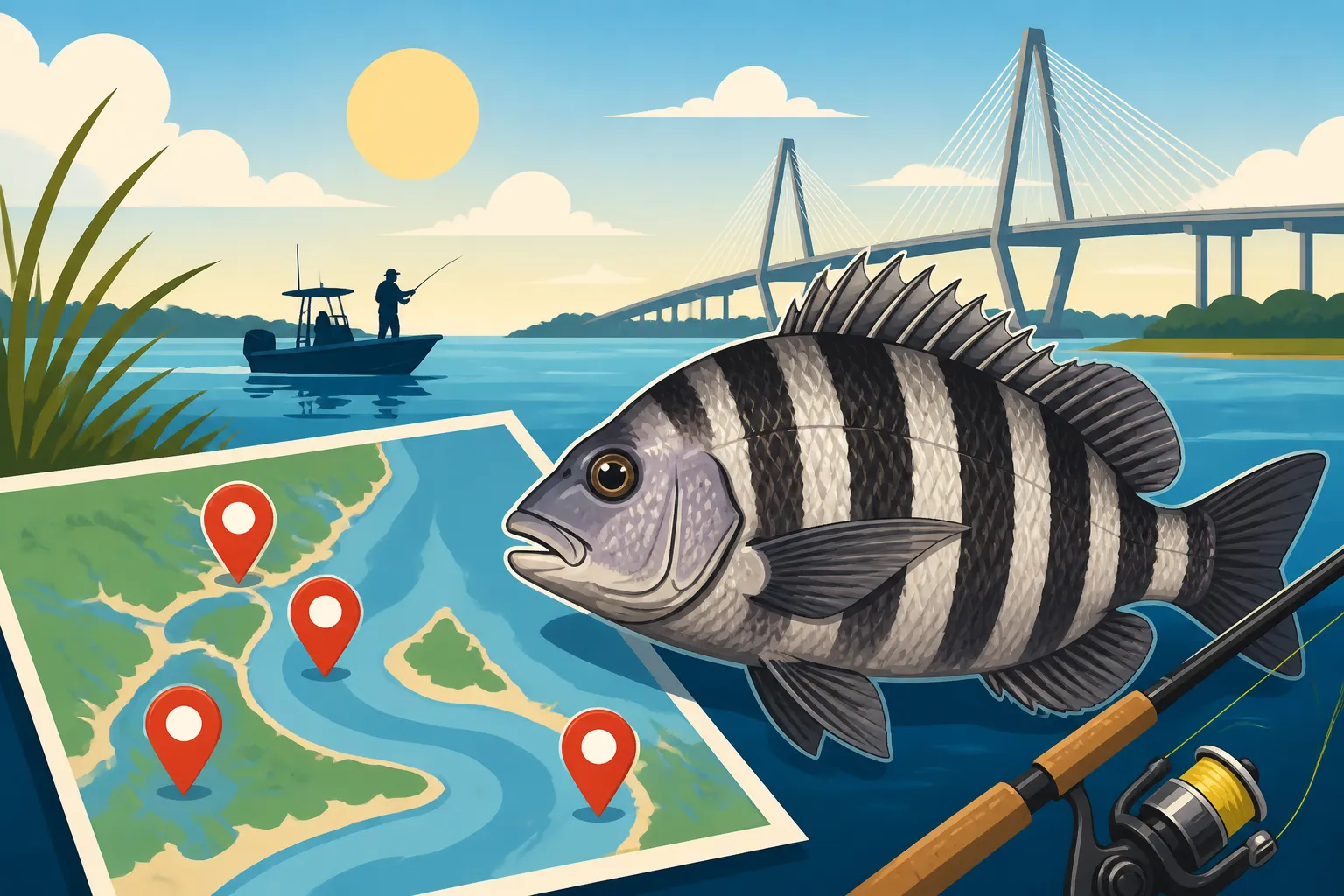
Without a doubt, the pilings of the Arthur Ravenel Jr. Bridge are a legendary spot for sheepshead in Charleston. These massive concrete structures are absolutely covered in barnacles, oysters, and other marine growth, providing an endless food source and complex habitat for sheepshead. The sheer number of pilings means there's always a good current break somewhere. You'll often find sheepshead stacked up along the sides of these pilings, especially on the current-protected side.
Fishing here requires precision. You'll want to get your bait as close to the pilings as possible without getting snagged immediately. Many anglers will "feel" for the structure with their sinker before casting. The current can be very strong here, so heavy tackle is often necessary to get your bait down quickly. It's a favorite spot for many experienced anglers, and for good reason – the potential for big sheepshead is real. Just remember to be mindful of boat traffic, as this is a very active waterway. You can learn more about Charleston Harbor fishing spots for South Carolina anglers, but the Ravenel Bridge is almost always at the top for sheepshead.
Rock Jetties and Artificial Reefs
At the mouth of Charleston Harbor, the rock jetties extending into the Atlantic provide another fantastic sheepshead habitat. These jetties are a labyrinth of rocks, crevices, and deep cuts, all encrusted with shellfish. Sheepshead thrive in these environments, picking off crustaceans and small fish. You can fish the jetties from a boat, anchoring just off the rocks and casting in, or in some areas, even from shore, though boat access offers more flexibility. Be aware that the ocean-facing side of the jetties can be very rough, so always prioritize safety.
Beyond the jetties, the South Carolina Department of Natural Resources (SCDNR) has deployed numerous artificial reefs both inside and outside the harbor. While many of these are designed for offshore species, some inshore artificial reefs or nearshore wrecks within the harbor system can hold good numbers of sheepshead. These submerged structures offer ideal conditions for sheepshead to feed and hide. Your boat's sonar can be invaluable for locating these less obvious spots.
Dock Pilings and Marina Structures
Don't overlook the more accessible, everyday structures found throughout Charleston Harbor. Dock pilings, particularly older wooden ones, are prime sheepshead territory. They're often covered in barnacles and sponges, providing both food and shelter. Marinas, boat ramps, and even private docks that jut out into the harbor or its feeder creeks (like those found around Mount Pleasant or Shem Creek) can hold good populations of sheepshead.
When fishing docks, approach quietly and cast your bait directly alongside the pilings. The fish can be surprisingly skittish in shallower water. Look for docks that have been around for a while, as they tend to have more established marine growth. Often, the shaded side of a dock or the pilings deepest in the water will be most productive. Always be respectful of private property when fishing around docks and marinas; stick to public access points unless you have permission. For those who prefer to fish from shore, knowing the best bank fishing spots in South Carolina can still yield sheepshead if those banks have nearby docks or rock structures.
Essential Gear and Techniques for Charleston Harbor Sheepshead
Sheepshead are called "convict fish" not just for their stripes but for their cunning. Catching them requires specific gear and a touch of finesse. Their bite is so light it's often described as just a "tap" or a "tick," making them a challenge even for seasoned anglers.
Rigging for Success: Baits and Tackle
When it comes to sheepshead, bait is paramount. They are primarily bottom feeders with incredibly strong, human-like teeth designed for crushing shells. The undisputed king of sheepshead bait in South Carolina's brackish waters is the fiddler crab. You can often catch these yourself in the marsh or buy them from local bait shops. Other effective baits include pieces of oyster, clam, shrimp, and even fresh sand fleas. Many anglers will also scrape barnacles off nearby pilings to use as bait, which can be incredibly effective since it's a natural food source in their environment.
For tackle, a medium-light to medium action rod, around 7 feet long, paired with a 2500-3000 size spinning reel, is a good all-around setup. Spool your reel with 10-20 lb braided line for sensitivity, as detecting their subtle bite is crucial. A fluorocarbon leader of 15-20 lb test is recommended for abrasion resistance against sharp structures and their shell-crushing teeth. As for the rig itself, a Carolina rig or a dropper loop rig with a small, sharp hook (like a Kahle or small circle hook, size 1 to 1/0) is usually best. The weight of your sinker will depend entirely on the current; you need enough to hold your bait on the bottom without getting swept away. For more in-depth advice on rigging, check out our guide on Sheepshead fishing tips for South Carolina's brackish waters.
Mastering the Sheepshead Bite
This is where the legend of the sheepshead truly comes alive. Their bite is infamous because they are expert bait stealers. Instead of a strong pull, you'll often feel nothing more than a slight pressure, a subtle tap, or even just a feeling of "weight" on your line as they mouth the bait. Many anglers describe it as feeling like a shrimp swimming into your line, or tiny crabs picking at it. It takes incredible focus and practice to distinguish a sheepshead bite from the current or a piece of debris.
When you do feel that slightest disturbance, resist the urge to rear back with a massive hookset. A quick, firm snap of the wrist is usually all that's needed. If you're using circle hooks, a steady, continuous retrieve once you feel pressure is often enough to set the hook in the corner of their mouth. The key is to be extremely attentive to your line and the feel of your rod. Keep your rod tip slightly lowered towards the water to allow for a quick, upward hookset. You'll miss a lot of bites, but with persistence, you'll start to recognize that unmistakable sheepshead "tick." It's a truly rewarding feeling when you finally get it right!
Navigating Charleston Harbor for Sheepshead Anglers
Charleston Harbor is a bustling area, and navigating it safely while finding prime fishing grounds is important. Whether you're a local with your own boat or visiting and looking to explore, understanding access and local resources will make your trip smoother.
Public Access Points and Boat Ramps
For anglers with their own boats, Charleston Harbor offers several excellent public boat ramps. Wappoo Cut Boat Landing, located just off James Island, provides easy access to the main harbor and surrounding creeks. Remley's Point Boat Landing in Mount Pleasant is another popular choice, putting you close to Shem Creek and the eastern side of the harbor. Johns Island Boat Landing on the Stono River also offers good access, especially for those looking to fish the western reaches of the harbor and its tributaries. These ramps are well-maintained and typically have ample parking, but they can get crowded on weekends, especially during peak fishing seasons.
For those without a boat, fishing from public piers, bridges with pedestrian access, or designated bank fishing spots can still yield sheepshead, especially if they are near bridge pilings or dock structures. Just remember that sheepshead are often found tight to vertical structures, so these spots can be challenging but rewarding. Always check local regulations for fishing from specific piers or bridges; sometimes, a pier will have a master license covering all anglers, but it’s always best to be sure. You might even find some lesser-known spots by looking at our guide to the Best Bank Fishing Spots in South Carolina.
Chartering a Trip for Local Expertise
If you're new to Charleston Harbor, don't have a boat, or simply want to maximize your chances of success, booking a fishing charter is an excellent option. Local guides live and breathe these waters; they know exactly where the sheepshead are biting, what baits they prefer on any given day, and how to navigate the complex tides and currents. They also typically provide all the necessary gear, bait, and often even handle your South Carolina fishing license for charter trips.
Many experienced captains specialize in inshore fishing, specifically targeting species like sheepshead, redfish, and spotted seatrout. A quick search on platforms like FishingBooker can connect you with reputable Charleston-based captains. Companies like Charleston Fishing Charters or Redfin Charters are well-regarded and offer guided trips tailored to your preferences, whether you're looking for a half-day adventure or a full day on the water. They'll teach you the nuances of the sheepshead bite and put you on fish you might otherwise miss. Consider booking a Charleston Inshore Fishing Charter Cost to experience the harbor with a true expert.
Charleston Harbor Sheepshead Fishing Hotspots Comparison
To help you visualize your options, here's a quick comparison of some popular sheepshead fishing spots within Charleston Harbor.
| Spot Type | Key Features | Best Conditions | Accessibility | Primary Challenges |
|---|---|---|---|---|
| Arthur Ravenel Jr. Bridge Pilings | Abundant marine growth, strong current breaks, deep water | Mid-tide, slight current | Boat, limited pier | Strong current, boat traffic, snags |
| Charleston Jetties | Rocky structure, rich ecosystem, harbor entrance | Incoming/outgoing tide | Boat, some shore access | Open water conditions, strong waves, snags |
| Marina & Dock Pilings | Sheltered waters, barnacle-covered wood | Mid-tide, calmer water | Boat, bank (public access) | Private property, lighter fish pressure, boat traffic |
| Artificial Reefs (Inshore) | Submerged structure, concentrated fish habitat | Slack tide, sonar needed | Boat only | Locating exact spots, potential for snags |
This table should give you a better idea of where to focus your efforts based on your preferred fishing style and equipment.
South Carolina Fishing Regulations for Sheepshead
Before you even think about dropping a line in Charleston Harbor, make sure you're up to date on all the relevant regulations. South Carolina has specific rules for sheepshead to ensure sustainable fishing practices. These regulations can change, so it’s always wise to double-check the latest guide from the SCDNR.
Currently, there are size and bag limits for sheepshead. You'll need to know the minimum size to keep a sheepshead and the daily creel limit per person. It’s not uncommon to catch smaller fish that need to be released, so having a way to quickly and safely unhook and return them to the water is crucial. Always carry a measuring device and be familiar with how to identify a sheepshead by its teeth and distinctive stripes, making sure you don't accidentally keep a non-target species.
Also, remember that anyone 16 years of age or older needs a valid South Carolina Fishing License Guide to fish in saltwater. Whether you're fishing from your own boat, a public pier, or with a charter, having the proper license is essential. Some charter boats operate under a blanket license, but it's always best to confirm with your captain. Understanding these rules protects the fishery and ensures you have a legal and enjoyable time on the water.
Disclaimer
Please remember that fishing conditions, regulations, and fish behavior can change rapidly. Always consult the latest South Carolina Department of Natural Resources (SCDNR) guidelines before heading out on the water. Fishing inherently carries risks; always prioritize safety and be aware of your surroundings.