Understanding Why Certain Streams Restrict Trout Harvest
It can be incredibly confusing to look at South Carolina's fishing regulations and see that the rules for keeping trout aren't always the same, varying wildly from one stream to the next. You might read about a statewide limit, only to find a sign at your favorite mountain creek stating something entirely different, often much stricter. This guide is here to unravel that mystery, explaining the crucial reasons why certain streams have specific, often more restrictive, rules for trout harvest.
The Puzzle of Varying Trout Harvest Rules
Many anglers, especially those new to the beautiful mountain streams of South Carolina, often scratch their heads when they dive into the regulations. It feels like a patchwork quilt of rules rather than a straightforward blanket policy. One day you're fishing a stocked pond with a generous limit, the next you're on a pristine mountain stream where it's strictly catch-and-release, or maybe just a couple of small fish. This inconsistency can certainly be frustrating, making you wonder why the South Carolina Department of Natural Resources (SCDNR) doesn't just simplify things.
More Than Just a Statewide Limit
It’s easy to assume that if you have a valid South Carolina Fishing License Guide, one set of rules should apply everywhere. However, when it comes to trout, especially in our colder, higher elevation waters, that's simply not the case. The general statewide daily creel limit for trout might be a certain number, but many individual streams, sections of streams, or even entire watersheds operate under what are called "special regulations." These aren't arbitrary rules; they are carefully crafted management strategies designed to protect specific fisheries.
For instance, you might find that while the general rule allows for a basket of trout, a particular stretch of the Chattooga River or a tributary in the Jocassee Gorges area has a much lower limit, or even a total catch-and-release policy. These special regulations are often posted right at access points, but it's crucial to consult the official regulations manual or the SCDNR website before you ever cast a line. For more specifics, you might want to read our detailed guide on How Trout Limits Vary by Stream in South Carolina.
The Frustration of Inconsistent Information
Let's be real, it's a pain when you plan a trip, pack all your gear, and then arrive at your destination only to realize the rules are different than what you anticipated. This is a common grievance among trout anglers in South Carolina. One reason for this perceived inconsistency is the sheer diversity of our trout waters. Unlike larger lakes or coastal areas where fish populations might be more uniformly distributed, mountain trout streams are often small, isolated, and highly sensitive.
Think about the difference between a large, heavily stocked river versus a tiny, remote tributary. The ecological factors, the fish populations, and the angling pressure are vastly different. What works for managing one won't work for the other. This means that fisheries biologists must adopt a nuanced approach, leading to regulations that, while confusing at first glance, are ultimately tailored to ensure the long-term health of each unique fishery. It's about precision conservation, even if it adds a layer of complexity for us anglers.
Protecting Wild and Native Trout Populations
At the heart of many restrictive trout harvest regulations lies a deep commitment to preserving South Carolina's wild and native trout. While the state is well-known for its beautiful coastal waters and productive lakes, a hidden gem exists in the Appalachian foothills – a network of cold, clear streams that harbor some truly special fish.
The Jewel of Native Brook Trout
South Carolina is home to the southernmost populations of native brook trout (Salvelinus fontinalis) in the world. These vibrant, colorful fish are not stocked; they are wild, self-sustaining populations that have adapted to their specific mountain environments over millennia. They are incredibly sensitive to changes in water quality, temperature, and habitat. Because these fish represent a unique and irreplaceable genetic resource, protecting them is a top priority for the SCDNR.
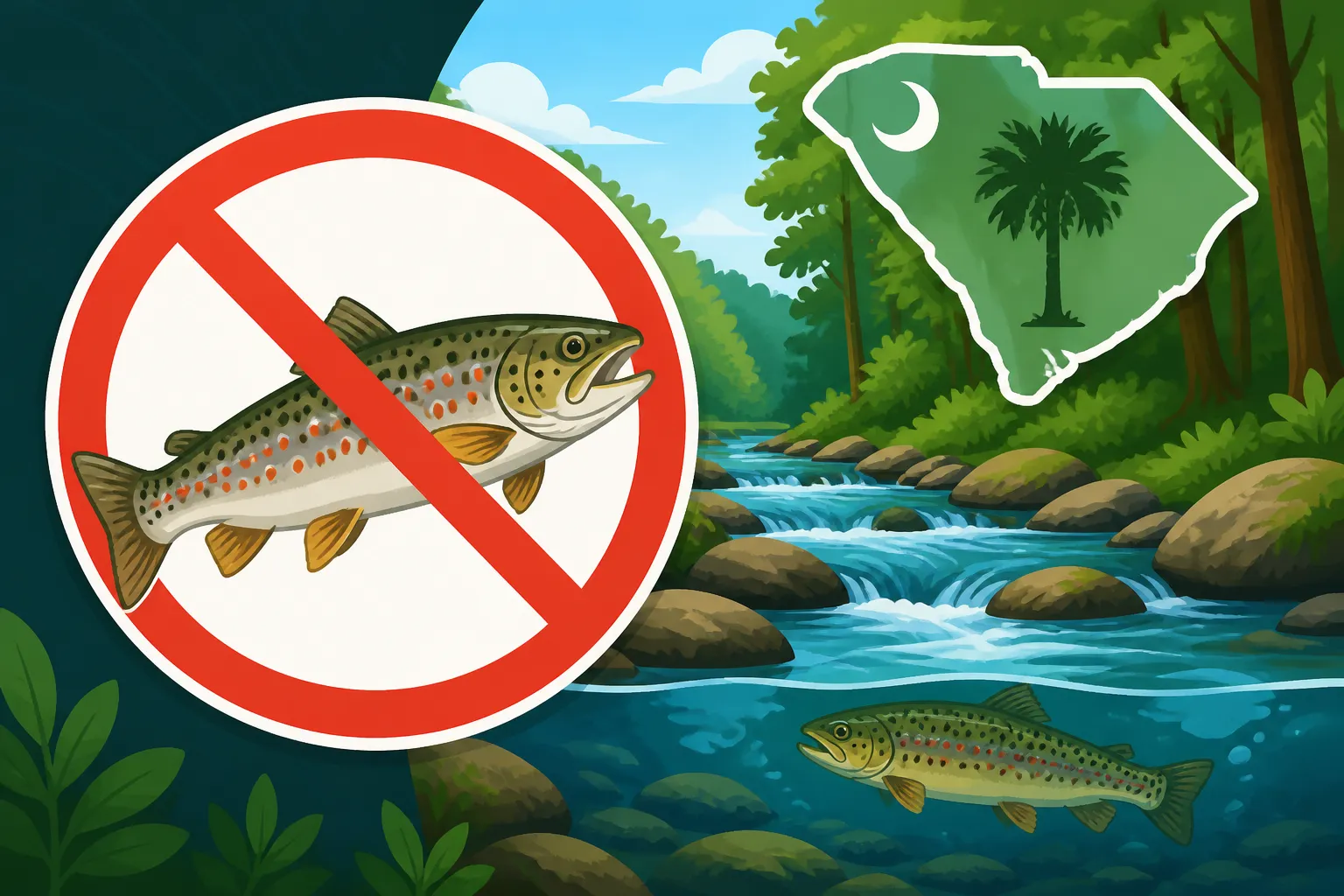
When you encounter a stream with a catch-and-release rule or a very low harvest limit, it's often because that stream is home to these precious native brook trout. The goal isn't just to let them grow larger, but to ensure they can successfully spawn and maintain healthy populations for future generations. Harvesting even a few brook trout from a small, isolated stream can have a disproportionately large impact on its ability to recover, which is why the rules are so stringent. You can learn more about these fascinating fish by checking out our guide on Native Brook Trout Streams in South Carolina's Blue Ridge Mountains.
Fragile Ecosystems and Spawning Grounds
These mountain streams are incredibly fragile ecosystems. Trout, especially native brook trout, rely on specific conditions for survival and reproduction. They need consistent cold water temperatures, which are increasingly threatened by climate change and deforestation. They also require clean, oxygen-rich water flowing over gravel beds for spawning. Any disruption to these conditions, whether from pollution, erosion, or excessive angling pressure, can have devastating effects.
Special harvest restrictions are a direct response to this fragility. By limiting the number of fish that can be taken, or by requiring catch-and-release, the SCDNR ensures that enough adult fish remain to spawn successfully. This is particularly critical in streams where spawning habitat is limited or where the fish population density is naturally low. These rules aren't just about the fish you see; they're about safeguarding the entire delicate balance of the stream environment that allows these populations to thrive.
Managing Stocked Trout vs. Wild Fisheries
One of the biggest distinctions influencing trout harvest regulations is whether a stream primarily supports a wild, self-sustaining fishery or relies on stocking programs. Understanding this difference is key to making sense of the varying rules you encounter across South Carolina.
The Purpose of Stocking Programs
Many of South Carolina's popular trout fishing destinations, particularly those at lower elevations or larger rivers like the Chattooga and Chauga, receive regular stockings of trout from the SCDNR hatchery system. These stocked trout are primarily rainbow trout (Oncorhynchus mykiss) and brown trout (Salmo trutta), which are robust and grow well in a variety of conditions. The purpose of these stocking programs is primarily to create "put-and-take" fisheries, providing ample opportunities for anglers to catch and keep fish.
These stocked sections often have more liberal harvest limits because the fish are being replenished artificially. The idea is to provide immediate angling satisfaction, giving families and new anglers a better chance of bringing home a meal. The stocked fish are intended for harvest, taking pressure off the more delicate wild populations. This is a common and effective management tool that allows for diverse angling experiences across the state. For instance, the Burrells Ford Access on the Chattooga River is a well-known stocked area, offering different opportunities than its smaller, wild tributaries.
Balancing Angler Opportunity with Conservation
The SCDNR walks a fine line, aiming to provide fantastic angling opportunities while simultaneously ensuring the long-term health of the state's trout resources. This balance is precisely why you see different regulations. In stocked waters, the emphasis can be more on recreation and harvest, since the populations are supplemented. Here, you might find a higher daily limit, such as the general state limit for trout, allowing anglers to enjoy their catch.
However, in streams designated as "wild trout waters" or "special regulation streams," conservation takes precedence. The rules are designed to protect the genetic integrity and reproductive capacity of the wild fish, rather than simply providing a catch. This often means reduced bag limits, increased size restrictions, or even mandatory catch-and-release. It's a pragmatic approach, recognizing that not all trout streams are created equal in terms of their ecological value or their ability to sustain heavy fishing pressure. This careful balancing act ensures that anglers can still enjoy fishing for trout, while also knowing that critical natural resources are being safeguarded.
Environmental Factors and Stream Health
Beyond whether fish are wild or stocked, the very health and characteristics of a stream itself play a huge role in determining harvest restrictions. Not all flowing waters are equally hospitable to trout, and the environment dictates what a population can sustain.
Water Temperature and Oxygen Levels
Trout are cold-water fish, through and through. They thrive in water temperatures generally below 68°F (20°C) and require high levels of dissolved oxygen. Many of South Carolina's mountain streams, especially at higher elevations, are spring-fed or flow from deeply shaded ravines, keeping them naturally cold even during summer. However, lower elevation streams, or those that have lost their tree canopy due to logging or development, can warm up quickly.
In streams where water temperatures might push the upper limits of trout tolerance, or where oxygen levels can periodically drop, fish are under more stress. When fish are stressed, their growth can be stunted, their immune systems weakened, and their ability to reproduce compromised. In such cases, restrictive harvest limits act as a buffer, reducing external pressure on an already vulnerable population. This helps ensure that even a small, struggling population has the best chance to survive and recover. It's why fisheries biologists are constantly monitoring stream conditions, sometimes even after heavy rain or during prolonged droughts, to assess trout well-being.
Habitat Quality and Food Availability
The physical structure of a stream and the abundance of its food sources are equally critical. Healthy trout streams have a mix of riffles, runs, and deep pools, along with plenty of instream cover like boulders, fallen trees, and undercut banks. A robust riparian zone – the vegetation along the banks – provides shade, stabilizes banks, and contributes insect life to the stream. All of these elements provide crucial habitat for trout to feed, hide from predators, and spawn.
Streams with degraded habitat – perhaps due to erosion, sedimentation, or a lack of natural structure – simply cannot support as many fish as pristine ones. Similarly, if the insect populations (mayflies, caddisflies, stoneflies, etc.) that form the base of the trout's diet are scarce, the stream's carrying capacity is reduced. When habitat or food availability is limited, stricter harvest limits become essential. They prevent over-exploitation of a fish population that's already struggling to thrive in a suboptimal environment. This allows the available resources to sustain a smaller, but healthier, number of fish, increasing their chances of long-term survival.
Angler Pressure and Sustainable Practices
It's a simple truth: the more people fishing a particular spot, the more impact that fishing has on the fish population. Angler pressure is a significant factor in shaping harvest regulations, especially in readily accessible or popular trout streams.
High-Pressure Streams and Overharvesting Risks
South Carolina's trout fishing, while perhaps not as famous as its bass or saltwater opportunities, draws a dedicated crowd, especially in the scenic Upstate. Streams that are easy to access, well-marked, or located within popular recreational areas tend to experience much higher angler pressure. Think about streams near state parks or those with paved access points. Everyone wants to enjoy the beauty and the thrill of catching trout, and that's completely understandable.
However, unchecked angler enthusiasm can quickly lead to overharvesting, particularly in smaller streams with limited fish populations. If too many fish are removed, especially larger, more reproductively important individuals, the population can crash. To counteract this, the SCDNR implements stricter regulations in these high-pressure areas. These rules are designed to distribute the catch more evenly among anglers and, more importantly, to ensure that enough fish remain in the stream to reproduce and sustain the fishery into the future. It’s a way of sharing the resource sustainably, even if it means individual anglers might take home fewer fish on some days.
Catch-and-Release Zones and Special Regulations
In some of South Carolina's most sensitive or productive wild trout waters, you'll find "catch-and-release only" zones, or streams with very specific gear restrictions (e.g., artificial lures only, single barbless hooks). These special regulations represent the highest level of protection. The philosophy here is that the value of these fisheries lies not in their ability to provide fish for the dinner table, but in the unique recreational experience of catching wild trout and the intrinsic value of preserving a pristine ecosystem.
These regulations allow fish to grow larger and reach their full reproductive potential, creating a robust population that can withstand the stress of being caught multiple times. It also helps to minimize "fishing mortality" – the number of fish that die after being released – by encouraging practices that are less harmful to the fish. For those who truly value the pursuit of a challenging, wild trout without the intent to harvest, these zones offer an unparalleled experience. You can find more information on which streams have these policies by looking into Which South Carolina Streams Are Catch-and-Release Only for Trout?.
How to Stay Informed About Specific Stream Regulations
Given the varied nature of trout regulations in South Carolina, staying informed is absolutely paramount. No one wants a citation, and more importantly, no one wants to inadvertently harm a sensitive fishery. It's a small effort that makes a huge difference.
SCDNR Resources and Local Signage
The single most authoritative source for South Carolina fishing regulations is the SCDNR. They publish a comprehensive regulations guide annually, available both online and in print at many license vendors. This guide details all statewide limits and, crucially, lists special regulations for specific bodies of water. Don't just skim it; read the trout section thoroughly, paying close attention to any stream-specific rules.
Beyond the official guide, look for signage at public access points. The SCDNR often posts bright yellow or orange signs at stream crossings, trailheads, and parking areas that clearly state any special regulations in effect for that particular section of water. Always take a moment to read these signs, as they provide the most up-to-date, localized information. You can often find detailed maps and specific rules for areas like the Sumter National Forest or the Jocassee Gorges on the SCDNR website as well. When you're heading out, it's a good idea to bring a physical copy of the regulations or have them downloaded on your phone, just in case cell service is spotty in the mountains.
The Importance of Pre-Trip Research
Going fishing should be relaxing, but a little homework beforehand can save a lot of headaches. Before you even pack your rod and reel, make it a habit to research the specific stream or section of stream you plan to visit. A quick search on the SCDNR website for that particular waterway will often yield direct links to its regulations. Many local fly shops, bait and tackle stores, or even online fishing forums can also be excellent resources for current conditions and rules. You can also find some very detailed local guidebooks on Amazon that often include maps and specific regulation call-outs.
Imagine planning a weekend trip to fish for trout in the Upstate. Instead of just grabbing your gear, you spend fifteen minutes looking up "South Carolina Streams With a 5-Fish Trout Limit" or "Checking a Stream's Trout Limit Before You Fish It" and cross-referencing that with the SCDNR's online resources. This small act of due diligence ensures you're fishing legally and responsibly, contributing to the conservation efforts, and avoiding a costly penalty for fishing without a license in South Carolina. It’s all about being a prepared and ethical angler, respecting the resource, and making sure everyone can enjoy the bounty of South Carolina's waters for years to come.
Understanding Trout Harvest Regulations at a Glance
To help simplify the complex world of trout regulations, here's a general overview of how different stream types in South Carolina often correspond to various harvest restrictions. Remember, this is a generalization, and always check the official SCDNR regulations for your specific fishing location.
| Stream Type / Characteristics | Typical Harvest Regulation Approach | Rationale | Example Species Often Targeted |
|---|---|---|---|
| Stocked "Put-and-Take" Waters | More liberal daily limits (e.g., 7-8 fish per day), sometimes with no size restriction. | Designed for angler harvest; populations are replenished by hatchery. | Rainbow Trout, Brown Trout (stocked) |
| Wild Trout Streams (Mixed Species) | Reduced daily limits (e.g., 5 fish per day), often with minimum size limits (e.g., 10-12 inches). | Balances harvest with protection of natural reproduction. | Rainbow, Brown, Native Brook Trout |
| Native Brook Trout Streams | Highly restrictive; often 2 fish per day, small size limits, or strictly catch-and-release. | Protects genetically unique, sensitive, and naturally reproducing populations. | Native Brook Trout |
| Catch-and-Release Only Waters | Zero harvest allowed; sometimes requires artificial lures and single, barbless hooks. | Maximize fish survival and growth; provide trophy opportunities; conservation. | All trout species (wild or stocked) |
| Heavily Fished/Accessible Waters | May have lower limits or specific slot limits to distribute catch and reduce pressure. | Manages high angler pressure to prevent overharvesting. | Rainbow, Brown Trout |
Disclaimer
Please note: Fishing regulations are subject to change. Always consult the most current South Carolina Department of Natural Resources (SCDNR) regulations guide before engaging in any fishing activity. This article is for informational purposes only and should not be considered a substitute for official legal guidance.