South Carolina Fishing License Reciprocity With North Carolina
There’s nothing quite as frustrating as planning a relaxing fishing trip to a beautiful border lake or river, only to realize you’re completely unsure which state’s fishing license you actually need. You’ve probably heard whispers of "reciprocity" agreements between states, leading to hope that one license might cover you in two places. For anglers looking to cast a line along the South Carolina and North Carolina border, this guide will clear up the common confusion surrounding fishing license reciprocity and help you stay on the right side of the law.
Understanding Fishing License Reciprocity
The idea of fishing license reciprocity is a real lifesaver for many anglers who live near state lines or frequently travel between neighboring states. It essentially means that a fishing license purchased in one state is recognized as valid in certain specified border waters of an adjacent state. This eliminates the need to buy two separate licenses for what might feel like the same body of water, making cross-state fishing much more accessible and less of a headache. However, these agreements aren't universal, and they often come with very specific conditions and designated areas.
What Reciprocity Means for Anglers
For the lucky folks who fish on truly reciprocal waters, it’s a game-changer. Imagine you live in Rock Hill, South Carolina, but love fishing the lower reaches of the Catawba River, which flows into North Carolina. If there were a full reciprocity agreement, your South Carolina fishing license would be honored while you're fishing those designated North Carolina sections of the river, and vice-versa for North Carolina residents fishing into South Carolina. It simplifies everything – you only have to keep track of one set of regulations (usually the more restrictive of the two states, or as specified in the agreement) and pay for one license. This makes impromptu trips easier and broadens your fishing horizons without doubling your paperwork or expense.
Why Border Waters Create Confusion
The very nature of border waters is what breeds this confusion. Rivers like the Catawba don’t magically stop flowing at an arbitrary line on a map; they continue, often through areas that look identical from a fishing perspective. Lakes like Lake Wylie, which straddles the SC/NC border, are prime examples. An angler might launch their boat from a South Carolina ramp and drift into North Carolina waters without even realizing it. Without clear signage or easily identifiable landmarks, it's incredibly easy to inadvertently cross state lines. This ambiguity, coupled with varying state laws on what constitutes "border water" and whether any formal agreements are in place, leaves many anglers scratching their heads, genuinely wanting to do the right thing but unsure how.
The General Rule: One License Per State
Here's the often-unspoken truth, and it's a critical baseline for any angler: unless a specific, written, and publicly recognized reciprocity agreement exists for a particular body of water, you generally need a valid fishing license for the state in which you are physically fishing. This means if your lure lands in North Carolina waters, you need a North Carolina license. If you're standing on the bank in South Carolina, you need a South Carolina license. This is the default rule that every angler should operate under until they have confirmed otherwise for their specific fishing location. It's always safer to err on the side of caution and ensure you have the correct documentation for wherever your hook drops.
South Carolina and North Carolina Border Waters
When you look at the map, South Carolina and North Carolina share a significant land boundary, and along that boundary, there are indeed rivers and lakes that seem to flow seamlessly between the two states. This proximity naturally leads anglers to wonder about shared fishing access. However, the reality of fishing license reciprocity between these two states is often different from what many might assume.
Key Border Areas Between South Carolina and North Carolina
The most prominent shared waterway that comes to mind for many is the Catawba River system, including Lake Wylie, which undeniably forms a significant part of the border between the two states. Other smaller rivers and streams also meander across the state line in the Upstate and Pee Dee regions. Take Lake Wylie, for instance; one shoreline might be in South Carolina, while the other is in North Carolina. Or imagine casting from a boat that’s floating in the middle of the Catawba River, with land in both states visible. These are the kinds of scenarios that highlight the need for clear understanding regarding license requirements. Anglers frequently visit these areas, hoping for a day of productive fishing for bass, catfish, or panfish, often unaware of the nuances of state jurisdiction.
The Lack of Widespread Reciprocity Explained
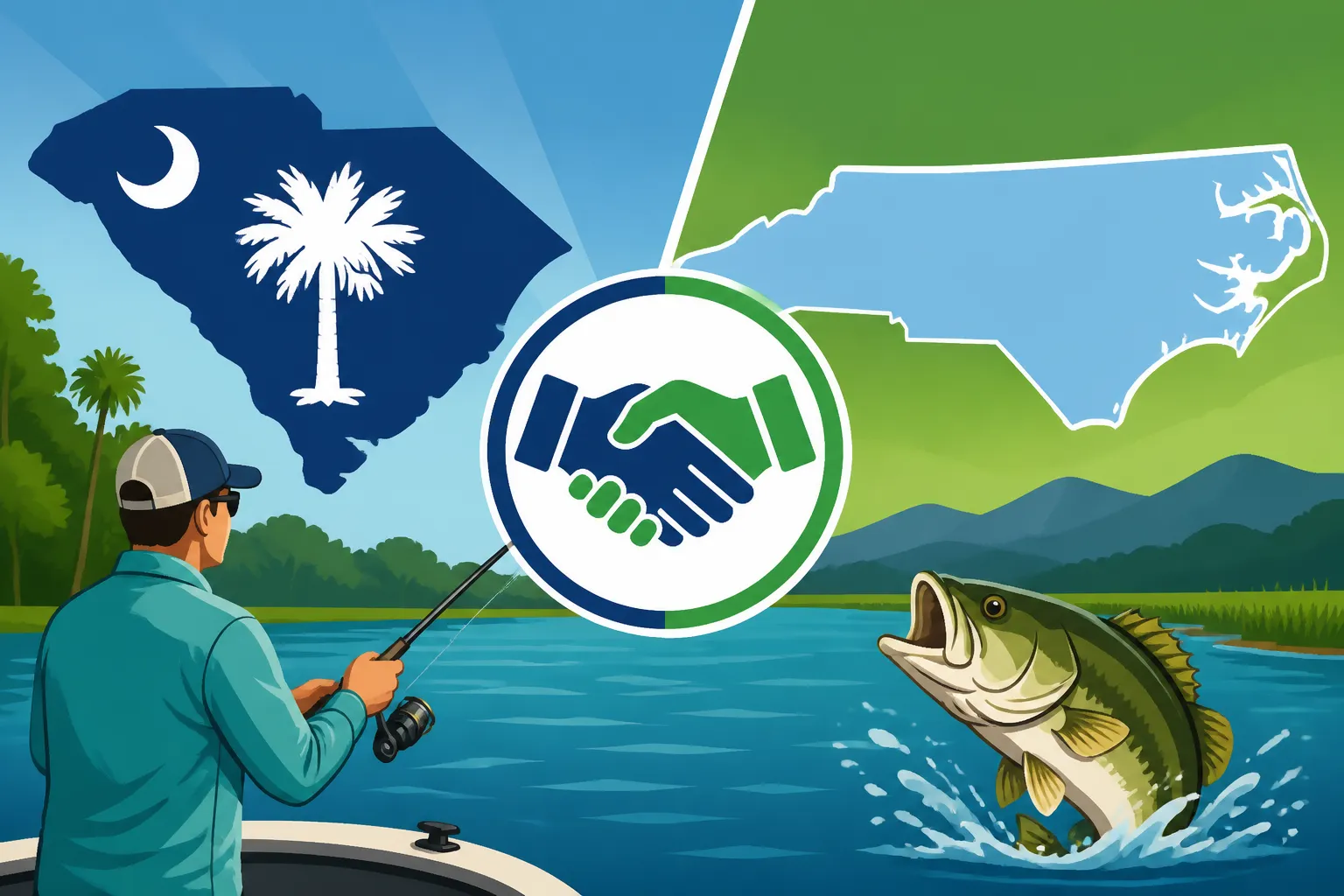
And here's where we get to the core of the matter for South Carolina and North Carolina: unlike some other state pairings, South Carolina generally does not have a blanket fishing license reciprocity agreement with North Carolina that covers all shared border waters. This means that if you are fishing in waters managed by the North Carolina Wildlife Resources Commission, you need a North Carolina fishing license. Conversely, if you are in waters overseen by the South Carolina Department of Natural Resources (SCDNR), you absolutely need a South Carolina fishing license. There aren't special carve-outs for Lake Wylie or the Catawba River that allow a single state license to cover both sides. This can be a bitter pill to swallow for anglers who are used to more flexible arrangements in other parts of the country or even with South Carolina's other neighboring states.
How This Differs from Other Border States
It’s important to note that South Carolina does have specific reciprocal agreements with Georgia. For example, for parts of the Savannah River and its reservoirs like Lake Hartwell, Lake Russell, and Lake Thurmond, a valid fishing license from either South Carolina or Georgia is typically honored. This often includes fishing from the bank or from a boat on these designated border waters. This kind of arrangement is exactly what anglers hope for, offering simplicity and reducing barriers to enjoying shared natural resources.
However, this specific arrangement with Georgia does not extend to North Carolina. This distinction is crucial and often misunderstood. Because a precedent exists with one border state, many assume it extends to all. This isn't the case, and anglers traveling from, say, upstate South Carolina to fish waters that border North Carolina need to be particularly diligent in confirming their license requirements, understanding that the easy reciprocity they might enjoy on the Savannah River simply isn't present here. For South Carolina fishing license requirements, always refer to the SCDNR guidelines.
When You Always Need a South Carolina License (and vice versa)
Given the lack of a general reciprocity agreement with North Carolina, it becomes even more critical for anglers to understand exactly when a South Carolina fishing license is required. It's not just about where you're physically standing; it can also depend on your starting point and even where your tackle lands. Thinking you're covered by an out-of-state license when you're actually in South Carolina waters can lead to unnecessary fines and a spoiled day on the water.
Fishing Entirely Within South Carolina Waters
This might seem like a no-brainer, but it's the most fundamental rule. If you are fishing any lake, river, stream, pond, or coastal water body that is entirely within the geographical boundaries of South Carolina, you must possess a valid South Carolina fishing license. This applies whether you're chasing largemouth bass on Lake Murray, casting for crappie on Lake Marion, or trying your luck for redfish in Murrells Inlet. There are no exceptions for residents of North Carolina or any other state if the fishing activity is solely within South Carolina's jurisdiction. This also holds true for fishing from public piers, bridges, or bank fishing access points within the state. You can find detailed information on how to get a fishing license in South Carolina to ensure you're compliant.
Launching from a South Carolina Boat Ramp
Even if you intend to fish waters that might technically border North Carolina, if you launch your boat from a public or private boat ramp located in South Carolina, the presumption is that you are beginning your trip within South Carolina's jurisdiction. While your boat might eventually navigate into North Carolina waters, having a valid South Carolina fishing license at the point of launch is a wise and often necessary step. This is especially true if you plan to fish any part of the water body while still within South Carolina's boundaries, which is almost always the case. Furthermore, if you return to a South Carolina ramp with fish, any fish you possess must comply with South Carolina's bag and size limits and have been legally caught under a valid SC license, even if some were caught in NC waters (where you would also need an NC license and comply with those rules).
Crossing State Lines During Your Fishing Trip
This is where many anglers get into trouble. Picture this: you've launched your boat from a South Carolina ramp on Lake Wylie, a beautiful body of water known for its excellent bass and catfish. You've got your South Carolina fishing license proudly displayed. But as the day progresses, following a promising fish finder reading or a good bite, you inadvertently drift or motor across the invisible state line into North Carolina waters.
At that exact moment, if you cast a line or are caught possessing fish caught in North Carolina waters without a valid North Carolina fishing license, you could be cited by North Carolina wildlife officers. The same principle applies in reverse: a North Carolina angler venturing into South Carolina waters needs an SC license. It’s a common scenario and a point of much frustration, but the laws are clear. It means if you plan to traverse border waters, the safest and most compliant approach is often to purchase fishing licenses for both states. This way, you're covered, regardless of which side of the invisible line you find yourself on. When looking into your options, you might even consider something like a South Carolina 14-Day Fishing License if you're only visiting for a short period and want to combine it with a short-term NC license.
Navigating the Rules: Practical Tips for Border Anglers
Fishing the border of South Carolina and North Carolina can be incredibly rewarding, offering diverse environments and excellent angling opportunities. However, the unique regulatory landscape demands a proactive approach to ensure a smooth, legal, and enjoyable trip. It’s all about planning ahead and arming yourself with the right information.
Checking Specific Water Body Regulations
Before you even hook up the boat or pack your tackle box, make it a priority to research the specific regulations for the body of water you intend to fish. Don't just assume; verify. Both the South Carolina Department of Natural Resources (SCDNR) and the North Carolina Wildlife Resources Commission (NCWRC) publish comprehensive guides and online resources. These resources will explicitly state if any specific reciprocity agreements exist for a particular lake, river, or section of a river. As we've discussed, for most SC/NC border waters, you'll likely find that separate licenses are required.
For example, if you're heading to Lake Wylie, check both the SCDNR's freshwater fishing regulations and the NCWRC's fishing rules to see if there are any specific notes on that lake regarding licenses. It's also a good idea to check for special regulations regarding bag limits, size limits, and tackle restrictions, as these can vary even if a reciprocal license agreement were in place. Sometimes, you can find physical regulation handbooks at local bait and tackle shops, or even order them online through retailers like Amazon, to have a tangible guide with you.
Getting Licenses from Both States (The Safest Bet)
Given the general lack of reciprocity between South Carolina and North Carolina for fishing licenses, the most straightforward and stress-free solution for anyone planning to fish both sides of a border water is to simply purchase licenses for both states. While it might feel like an added expense, it provides complete peace of mind and protects you from potential fines and legal hassles. Consider the cost of a nonresident freshwater fishing license for South Carolina or a nonresident saltwater fishing license if you anticipate crossing into coastal waters.
Think of it as an insurance policy for your fishing trip. You can easily purchase a South Carolina fishing license online through the Go Outdoors South Carolina platform. Similarly, North Carolina offers convenient online purchasing options. For avid anglers who frequently visit these border areas, investing in annual licenses for both states might be more cost-effective than multiple short-term licenses over time. Remember, fishing without a license in South Carolina can lead to penalties, so it's always better to be fully covered.
Understanding Bag and Size Limits for Each State
Even if you hypothetically possessed both a South Carolina and a North Carolina fishing license, it’s absolutely critical to understand that this does not mean you can mix and match bag and size limits. Each state maintains its own regulations for the species found within its waters, designed to protect and manage those specific fisheries.
Let's say you're fishing for striped bass on a border river. North Carolina might have one daily creel limit and minimum size, while South Carolina has another. If you catch a fish in North Carolina waters, it must meet North Carolina's regulations. If you then move into South Carolina waters and catch another fish, that one must meet South Carolina's regulations. You cannot combine your catch under the more lenient rule or claim a fish caught in NC falls under SC's limit just because you're now on the SC side. This is particularly important when talking about species like redfish, which have specific slot limits in South Carolina that might differ from North Carolina’s rules. Always refer to the regulations of the state where the fish was caught. This attention to detail will keep you out of hot water with wildlife enforcement officers from either state.
Penalties and Enforcement for Unlicensed Fishing
Ignoring the intricacies of border water regulations or simply hoping you won't get caught can turn an enjoyable day of fishing into a costly and frustrating experience. Wildlife enforcement officers, whether from the South Carolina Department of Natural Resources (SCDNR) or the North Carolina Wildlife Resources Commission (NCWRC), are tasked with protecting their state's natural resources and ensuring fair chase. They operate on border waters and are well-versed in where their jurisdiction begins and ends.
The Costs of Not Having the Right License
Getting caught fishing without the proper license in either South Carolina or North Carolina can result in significant financial penalties. A fine for fishing without a license in South Carolina typically starts in the hundreds of dollars, and that doesn't even count court costs or potential administrative fees. In some cases, especially for repeat offenders or if other violations like exceeding bag limits are involved, the penalties can escalate, potentially leading to the confiscation of your fishing gear or even your boat.
Consider a scenario where a North Carolina resident is fishing on Lake Wylie, believing their NC license covers them everywhere. If a SCDNR officer checks them in waters clearly identified as South Carolina's, that angler is facing a fine. The cost of purchasing a nonresident license for South Carolina, even an annual one, is almost always less than the penalty for a single violation. For those who frequently cross state lines, the minimal investment in an extra license pales in comparison to the financial hit and hassle of a citation.
DNR Enforcement on Border Waters
Both the SCDNR and NCWRC have active patrols on waters that form their shared border. These officers are highly trained and equipped to identify state lines, even invisible ones on a vast lake or winding river. They often use GPS technology to pinpoint exact locations, leaving little room for "I didn't know where I was" excuses.
It’s not uncommon for officers from both states to coordinate efforts, sharing information or even conducting joint patrols to ensure compliance. They are not out to spoil your fun, but to enforce laws that protect fish populations and ensure equitable access for all licensed anglers. If an officer approaches you on the water, always be polite, cooperative, and ready to present your valid fishing license(s) and identification. Trying to argue or evade them will only make the situation worse. They are simply doing their job to uphold the regulations that maintain healthy fisheries for everyone.
Avoiding Unintended Violations
The key to avoiding unintended violations is simply being informed and prepared. First and foremost, assume you need a license for each state if you plan to fish any water that touches both. Before heading out, download or pick up the latest fishing regulation summaries from both the SCDNR and NCWRC. These are invaluable resources that clarify rules, seasons, and limits.
Keep your licenses easily accessible – a digital copy on your phone or a printed copy in a waterproof holder, perhaps in a tackle bag you grabbed from Amazon, is crucial. If you're on a boat, having a GPS unit that clearly displays state boundary lines can be a lifesaver, allowing you to stay within your licensed waters or know precisely when you've crossed into another jurisdiction. Finally, don't rely on hearsay. What one angler tells you might be outdated or simply incorrect. Always verify information with official sources. A little preparation goes a long way in ensuring your fishing trip remains a relaxing and legal adventure.
South Carolina and North Carolina Fishing License Comparison
Understanding the costs and types of licenses available in both states can help you plan your multi-state fishing adventures. While there isn't general reciprocity, comparing the licenses helps highlight what you might need to purchase to be fully covered.
| License Type | South Carolina Resident Annual (Freshwater) | South Carolina Resident Annual (Saltwater) | North Carolina Resident Annual (Inland) | North Carolina Resident Annual (Coastal) | South Carolina Nonresident Annual (Freshwater) | South Carolina Nonresident Annual (Saltwater) | North Carolina Nonresident Annual (Inland) | North Carolina Nonresident Annual (Coastal) |
|---|---|---|---|---|---|---|---|---|
| Approx. Cost (as of 2024) | $10.00 | $15.00 | $25.00 | $16.00 | $35.00 | $75.00 | $45.00 | $30.00 |
| Primary Waters Covered | All freshwater | All saltwater | All inland waters (freshwater) | All coastal waters (saltwater) | All freshwater | All saltwater | All inland waters (freshwater) | All coastal waters (saltwater) |
| Short-Term Options? | Yes (14-day) | Yes (14-day) | Yes (10-day, 3-day) | Yes (10-day, 3-day) | Yes (14-day) | Yes (14-day, 7-day) | Yes (10-day, 3-day) | Yes (10-day, 3-day) |
| Combo Options Available? | Yes (Fresh/Saltwater Combo) | Yes (Fresh/Saltwater Combo) | Yes (Unified Inland/Coastal) | Yes (Unified Inland/Coastal) | Yes (Fresh/Saltwater Combo) | Yes (Fresh/Saltwater Combo) | Yes (Unified Inland/Coastal) | Yes (Unified Inland/Coastal) |
Note: Prices are approximate as of 2024 and are subject to change. Always check the official SCDNR and NCWRC websites for the most current pricing and regulations.
Remember, this table is for comparison and informational purposes. The key takeaway remains that for most border waters between South Carolina and North Carolina, you will need a separate license for each state if you plan to fish in both jurisdictions. For example, if you're a North Carolina resident looking to fish the freshwater areas of South Carolina that border your home state, you would likely need to purchase a South Carolina Nonresident Annual Freshwater Fishing License. It's often best to secure both licenses if there's any chance your fishing plans might take you across the invisible state line.
Disclaimer
The information provided in this guide is for general informational purposes only and is not intended as legal advice. Fishing regulations and license requirements can change frequently. Always consult the official websites of the South Carolina Department of Natural Resources (SCDNR) and the North Carolina Wildlife Resources Commission (NCWRC) for the most current and accurate regulations before engaging in any fishing activities.